If you’ve ever been texting someone and suddenly saw CM pop up, you might have paused for a second wondering what it means.
In today’s fast-moving digital world, short forms and abbreviations are everywhere, and CM is one of those confusing little terms that can mean different things depending on context.
You’re not alone—many people search for cm meaning in text because they want quick, clear answers without guessing.
In texting, every second matters, and using short forms helps people communicate faster, but it can also create confusion.
In simple words, CM is a multi-meaning abbreviation used in chats, social media, and even professional contexts.
Understanding it properly can help you avoid misunderstandings and reply confidently in conversations.
What Does CM Mean in Text?
The meaning of CM depends on the situation. It is not a fixed definition, which is why people get confused.
Here are the most common meanings:
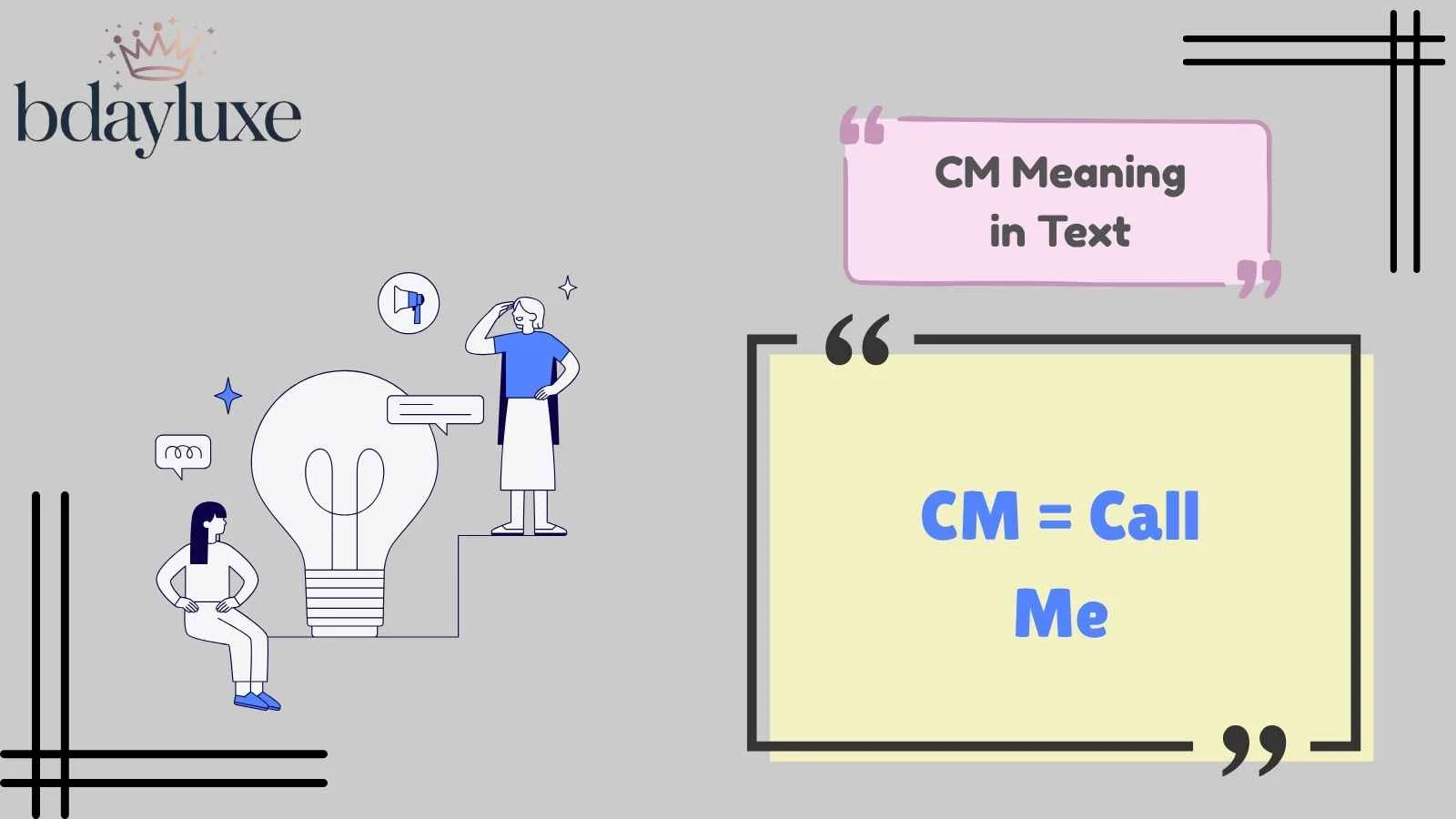
- CM = Call Me
This is the most popular meaning in texting. Someone uses CM when they want you to call them.
Example:
- I need to talk, CM ASAP.
- CM = Centimeter
In educational, scientific, or measurement-related contexts, CM stands for centimeter, a unit of length.
Example:
- The table is 120 cm long.
- CM = Comment
On social media platforms, CM can sometimes mean comment, especially in informal group chats.
Example:
- CM your opinion below.
So, CM is basically a context-based abbreviation, and the meaning changes depending on where and how it is used.
Origin and Background of the Term
The abbreviation CM didn’t start in texting—it originally comes from formal usage.
- In science and mathematics, centimeter (cm) has been used for centuries as part of the metric system.
- The texting meaning Call Me evolved much later with the rise of mobile phones and SMS culture in the early 2000s.
- As texting became shorter and faster, people started creating abbreviations like LOL, BRB, and CM to save time.
Over time, social media platforms like WhatsApp, Instagram, and Snapchat made these abbreviations even more popular. Today, CM is part of modern digital communication, blending both formal and informal meanings.
How CM Is Used in Daily Life
CM appears in many real-life digital conversations. Here are common ways people use it:
- In personal chats:
CM when you’re free. - In school or education:
Convert 50 cm into meters. - On social media posts:
CM your thoughts about this video. - In work messages (rarely informal):
CM me before the meeting starts. - In group chats:
CM if you agree.
These examples show how flexible and widely used CM has become in modern communication.
Emotional or Practical Meaning of CM
CM might look like a simple abbreviation, but it often carries emotional weight in conversations.
When someone says CM me, it usually means:
- They want attention
- They need communication
- They want urgency or connection
In personal relationships, CM can feel direct and even emotional because it often signals that someone wants to talk immediately.
On the practical side, CM helps make communication:
- Faster
- Shorter
- More efficient
In today’s busy world, where people send hundreds of messages daily, such shortcuts save time while still conveying meaning.
Similar or Related Terms
Here are some abbreviations similar to CM:
- DM (Direct Message): Private message on social media
- PM (Private Message): Similar to DM, used in older platforms
- BRB (Be Right Back): Temporary absence
- TTYL (Talk To You Later): Ending conversation
- ASAP (As Soon As Possible): Urgency indicator
- MSG (Message): General term for message
Each of these serves a similar purpose—making communication quicker and easier.
Common Misunderstandings About CM
Many people misunderstand CM because of its multiple meanings. Here are some common mistakes:
- Thinking CM always means Call Me
→ It can also mean centimeter or comment. - Assuming it is always informal
→ In science, it is a formal measurement unit. - Believing it is only used in texting
→ It is also used in education, math, and engineering. - Confusing it with similar abbreviations like DM or PM
→ They have completely different meanings. - Thinking it has one fixed definition
→ Context always decides its meaning.
Understanding these differences helps avoid confusion in conversations.
Examples of CM in Sentences
Here are natural, real-life examples:
- CM when you reach home.
- The box is 30 cm wide.
- CM your feedback on this post.
- She told me to CM after class.
- This rope is 200 cm long.
- CM if you’re interested in joining.
- The fish was about 15 cm in size.
- He said CM urgently, so I called him.
These examples show how flexible CM can be in everyday use.
Why Understanding CM Matters Today
In today’s digital world, communication is faster than ever. People rely heavily on abbreviations like CM to save time and express thoughts quickly.
Understanding CM matters because:
- It prevents misunderstandings in chats
- It helps you respond correctly in conversations
- It improves your digital communication skills
- It keeps you updated with modern slang
Whether you’re a student, professional, or social media user, knowing these small abbreviations helps you stay confident in online communication.
FAQs:
What does CM mean in simple words?
CM usually means Call Me, but it can also mean centimeter or comment depending on context.
Is CM positive or negative?
CM is neutral. Its meaning depends on how it is used in conversation.
Where is CM commonly used?
It is commonly used in texting, social media chats, school work, and measurement-related discussions.
Is CM formal or informal?
It can be both. In texting it is informal, but in science it is a formal unit of measurement.
Why do people search for CM meaning?
Because it has multiple meanings and people want to understand the correct usage in different situations.
Conclusion:
CM is a small abbreviation, but it carries multiple meanings depending on context.
From Call Me in texting to centimeter in science, it shows how flexible modern communication has become.
In a world full of fast messages and short attention spans, understanding terms like CM helps you stay connected and confident in every conversation.
It’s not just about knowing slang—it’s about understanding people better in the digital age.
No matter how small a word looks, it can carry big meaning. And once you understand it, communication becomes smoother, clearer, and more meaningful.